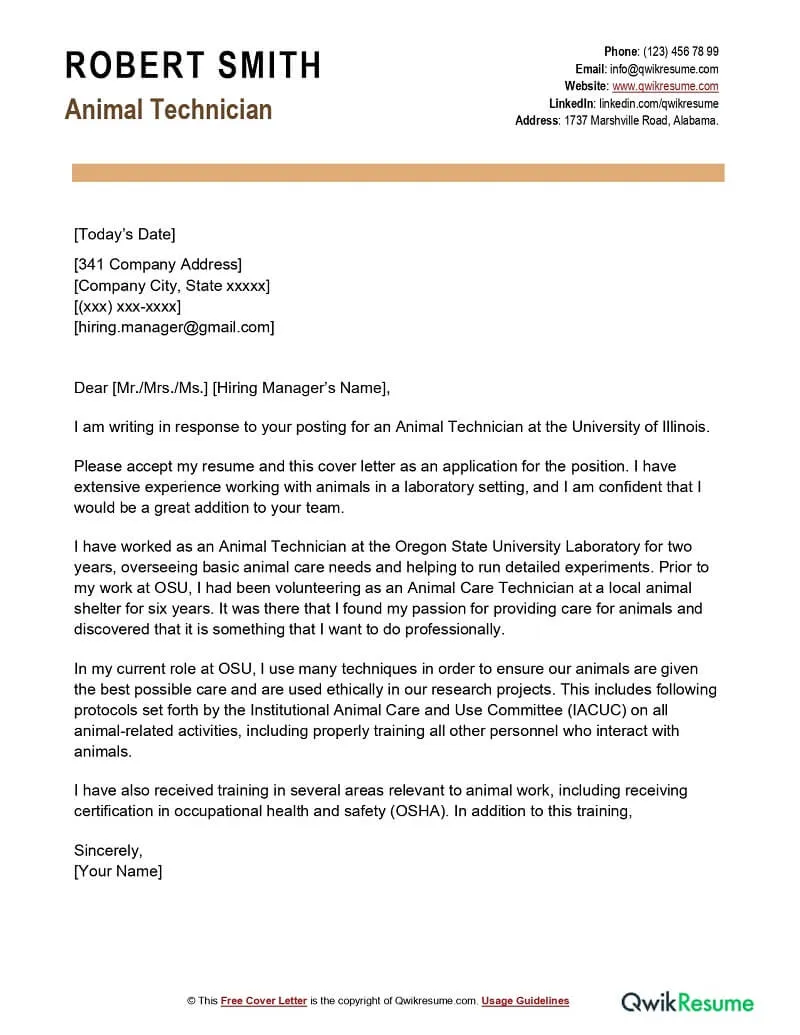
Crafting Your Veterinary Cover Letter
A well-crafted veterinary cover letter is your first impression on potential employers. It’s more than just a formality; it’s your opportunity to introduce yourself, highlight your skills, and demonstrate why you’re the ideal candidate for the job. Unlike a resume, which provides a factual overview of your experience, a cover letter allows you to express your personality, passion for veterinary medicine, and how you align with the specific needs of the practice. This guide will provide you with the essential components and strategies to create a compelling cover letter that grabs attention and increases your chances of landing an interview. Remember, each cover letter should be tailored to the specific job and practice to showcase your genuine interest and suitability. Taking the time to personalize each application significantly increases the likelihood of success. Therefore, make sure to review the job description carefully and address the key requirements and qualifications mentioned.
Understanding the Purpose of a Cover Letter
The primary purpose of a veterinary cover letter is to complement your resume and provide context to your qualifications. It’s your chance to tell a story—a story about your career aspirations, your dedication to animal welfare, and why you’re drawn to the specific practice. The cover letter showcases your communication skills, attention to detail, and ability to convey your enthusiasm. It should clarify your career goals and explain how your skills and experiences align with the job’s requirements. The cover letter also offers a chance to address any potential gaps in your resume or to explain why you’re changing careers or locations. Furthermore, a well-written cover letter demonstrates professionalism and initiative. It’s evidence that you’re prepared to go the extra mile to secure the position. By effectively communicating your unique value proposition, you can distinguish yourself from other applicants and make a lasting impression on the hiring manager. This detailed introduction offers you the chance to establish a connection with the reader.
Highlighting Your Veterinary Skills and Experience

Your veterinary cover letter is the perfect place to highlight your skills and experiences in a way that resonates with the employer. Begin by identifying the key skills and experiences the job description emphasizes. Then, provide specific examples that demonstrate your proficiency. Use action verbs to describe your accomplishments and responsibilities. For example, instead of stating you “assisted in surgeries,” you could say, “Assisted in over 50 surgeries, including spays, neuters, and orthopedic procedures, ensuring sterile environments and proper patient care.” Furthermore, quantify your achievements whenever possible. This could include the number of animals you’ve treated, the types of procedures you’ve performed, or any improvements you’ve made in previous roles. Consider skills like diagnostic abilities, surgical expertise, client communication, and team collaboration. These qualities, when demonstrated through concrete examples, will show your capability to succeed. This tailored approach significantly increases your credibility.
Tailoring Your Cover Letter for Each Application
Generic cover letters rarely make a significant impact. Customization is crucial for demonstrating genuine interest and suitability. Before writing, thoroughly review the job description to understand the practice’s needs and values. Then, reflect on your own experiences and skills to identify how you can meet those needs. Personalize your letter by addressing specific requirements and using keywords from the job posting. If the job emphasizes client communication, provide examples of how you successfully handled difficult client interactions. If the practice values teamwork, describe instances where you collaborated with colleagues. Tailoring your cover letter also involves researching the practice itself. Visit their website, social media pages, and read any reviews to gain insight into their culture. By demonstrating your familiarity with their values and mission, you show that you are the right fit. This level of personalization indicates that you are not simply sending out generic applications but are genuinely interested in the specific opportunity.
Researching the Veterinary Practice
Thoroughly researching the veterinary practice is a critical step in crafting a compelling cover letter. This research allows you to tailor your letter and demonstrate your interest in the specific opportunity. Start by visiting the practice’s website and exploring their mission, values, and the services they offer. Pay attention to their online presence, including their social media accounts, as it can provide insight into their culture. Look for information about the staff, their specializations, and any recent achievements or initiatives. Reading client testimonials or reviews can also give you a better understanding of the practice’s reputation and the quality of care they provide. Mentioning specific details from your research, such as their commitment to a specific type of animal care or their involvement in community outreach, can make your cover letter more engaging and demonstrate your sincere interest. Furthermore, this research can help you identify any common ground or shared values between yourself and the practice, which you can highlight in your letter.
Showcasing Relevant Veterinary Experience

When showcasing your experience, focus on the most relevant aspects that align with the job requirements. Start by listing the positions you’ve held and the key responsibilities you undertook in each role. Use action verbs to describe your tasks and accomplishments, such as “managed,” “performed,” “diagnosed,” or “implemented.” Quantify your achievements whenever possible; for instance, state the number of animals you treated or the types of procedures you performed. Provide specific examples of how you improved efficiency, patient care, or client satisfaction. Highlight any specialized skills or certifications you possess, such as experience with specific software, medical equipment, or surgical techniques. Tailor your descriptions to reflect the specific needs of the practice you’re applying to. If the job emphasizes surgical expertise, emphasize your surgical experience and any advanced procedures you’ve performed. This targeted approach demonstrates your suitability. Also, be prepared to provide specific examples to support your claims during an interview. By providing detailed and relevant information, you can showcase the depth of your professional background.
Detailing Your Veterinary Skills
Clearly detail your skills in a cover letter. This should be more than a simple list; provide context and examples of how you’ve applied those skills. Start by identifying the skills most relevant to the job description, such as diagnostic abilities, surgical techniques, client communication, or team collaboration. Use action verbs to describe how you’ve utilized these skills in past roles. For example, instead of saying “skilled in diagnostics,” you could write “Successfully diagnosed and treated a variety of conditions using diagnostic tools such as X-rays, ultrasounds, and blood analysis.” Include specific examples of when and how you’ve applied these skills to achieve positive outcomes. If the job emphasizes client communication, describe how you’ve successfully explained complex medical information to clients, handled difficult conversations, or built strong relationships. Quantify your achievements whenever possible, such as the number of successful diagnoses or the percentage of client satisfaction. By providing concrete examples and relevant details, you show employers that you possess the skills needed to succeed.
Emphasizing Your Passion for Veterinary Medicine
Conveying your passion for veterinary medicine is crucial in a cover letter. It’s your opportunity to showcase your enthusiasm and dedication to animal welfare. Start by expressing your genuine interest in the field and the specific practice. Explain why you’re drawn to veterinary medicine and what motivates you to provide high-quality care. Share a personal anecdote or story that illustrates your passion for animals. This could be an experience that inspired you to pursue this career or a specific instance where you went above and beyond to help an animal in need. Mention any areas of veterinary medicine that particularly interest you, such as surgery, internal medicine, or preventative care. Show that you’re continuously learning and growing by mentioning any relevant continuing education or certifications. Tailor your letter to the practice’s values. By expressing your passion in a genuine and authentic way, you create a connection with the reader and make a lasting impression. Your passion makes you stand out.
Formatting Your Veterinary Cover Letter

Proper formatting enhances readability and professionalism. Use a clear, easy-to-read font like Times New Roman, Arial, or Calibri in a standard size (11-12 points). Ensure your letter is well-structured with a clear heading, opening, body paragraphs, and closing. Include your contact information at the top, along with the date and the recipient’s information. Use single-spacing within paragraphs and double-spacing between paragraphs to make the text easier to follow. Keep your paragraphs concise and focused, ideally no more than 4-5 sentences each. Use bullet points or numbered lists to highlight key skills or achievements. Ensure the letter is properly aligned and avoid excessive use of bolding, underlining, or italics, as this can detract from the readability. Always proofread your cover letter carefully to catch any typos or grammatical errors. A well-formatted cover letter demonstrates your attention to detail and professionalism, increasing the likelihood of a positive first impression. Proper formatting also reflects well on your organizational skills and your ability to communicate clearly.
Writing a Strong Opening
Your opening paragraph is the first impression you make, so make it count. Start by addressing the hiring manager by name, if possible, using research to find it. Clearly state the position you’re applying for and where you found the job listing. Immediately capture the reader’s attention by expressing your enthusiasm for the opportunity. Then, briefly highlight one or two key skills or experiences that make you a strong candidate. Tailor your opening to show that you’ve researched the practice and are genuinely interested in working there. For example, you might mention something specific you admire about their mission or services. Avoid generic or cliché opening lines. Instead, focus on making a personal connection with the reader. A strong opening quickly establishes your interest, qualifications, and why you are the perfect fit. This sets the tone for the rest of your letter and encourages the reader to continue reading. It is your chance to show that you are not just sending out a generic application but that you are truly invested in the role and the practice.
Developing Compelling Body Paragraphs
The body paragraphs are where you provide the substance of your cover letter, so craft them carefully. Each paragraph should focus on a specific aspect of your qualifications or experience, supporting your claims with concrete examples. Start with a topic sentence that clearly states the main idea of the paragraph. Then, provide details that back up your claims, such as specific accomplishments, skills, or experiences. Quantify your achievements whenever possible, using numbers or percentages to illustrate your impact. Tailor your content to the specific needs of the job description. Focus on the skills and experiences that align with the practice’s requirements. Use action verbs to describe your contributions and achievements. To make your letter even more engaging, try to incorporate a brief story or anecdote that demonstrates your skills or passion. Keep your paragraphs concise and easy to read. Aim for no more than 4-5 sentences per paragraph. A well-structured and compelling body section is critical for demonstrating your value and persuading the employer that you are the ideal candidate.
Creating a Powerful Closing

The closing paragraph should reiterate your interest in the position and summarize your key qualifications. Reiterate your enthusiasm for the opportunity and the practice. Reiterate your enthusiasm for the opportunity and the practice. Express your confidence that you would be a valuable asset. Include a clear call to action, such as requesting an interview or stating your availability. Thank the reader for their time and consideration. Keep your closing brief, professional, and positive. Reiterate your excitement about the opportunity, and make it clear that you are eager to discuss your qualifications further. Ensure that the closing reinforces your primary message and leaves the reader with a positive impression. A strong closing paragraph is key to making a lasting impression. A well-crafted closing reinforces your value proposition and motivates the employer to contact you.
Proofreading and Editing Your Veterinary Cover Letter
Proofreading and editing are essential steps to ensure your cover letter is polished and professional. Start by reading your letter carefully to catch any typos, grammatical errors, and inconsistencies. Check for clarity and flow, ensuring that your ideas are well-organized and easy to understand. Consider asking a friend, colleague, or career counselor to review your letter and provide feedback. Proofread your cover letter multiple times, ideally on different days, to catch any errors. Pay close attention to details such as spelling, punctuation, and sentence structure. Make sure your formatting is consistent throughout. A well-proofread cover letter demonstrates your attention to detail and professionalism, increasing your chances of making a positive impression. Correcting even small mistakes can make a big difference in the overall quality of your application. By taking the time to proofread and edit your letter, you can ensure that it reflects well on your skills and experience.
Common Mistakes to Avoid in Your Cover Letter
Avoiding common mistakes can significantly increase your chances of success. Generic or impersonal cover letters are a major turnoff. Tailor each letter to the specific job and practice. Typos and grammatical errors can create a negative impression, so proofread carefully. Exaggerating your qualifications can damage your credibility, so always be honest. Repeating information from your resume is redundant; instead, provide additional context. Using jargon or overly technical language may alienate the reader. Focus on clear, concise communication. Forgetting to include a call to action, such as requesting an interview, can limit your chances. Negative language or complaining about previous employers can create a bad impression. Be positive and professional in your tone. By avoiding these common mistakes, you can demonstrate your professionalism. Focusing on what you can bring to the role is key.