Scholarship Cover Letter Top Tips for Success
Crafting a compelling scholarship cover letter is a crucial step in the application process. It’s your opportunity to showcase your personality, achievements, and aspirations beyond what’s listed on your resume or application form. A well-written cover letter can significantly increase your chances of securing a scholarship, providing the scholarship committee with a deeper understanding of who you are and why you deserve their support. This guide provides essential tips and a clear format to help you create a winning scholarship cover letter.
Understanding the Scholarship Cover Letter
Before diving into the specifics, it’s essential to understand the role a scholarship cover letter plays in your application. It’s more than just a formality; it’s a powerful tool that can set you apart from other applicants. Understanding its purpose and the key components will enable you to craft a letter that resonates with the selection committee and highlights your suitability for the scholarship.
The Purpose of a Cover Letter
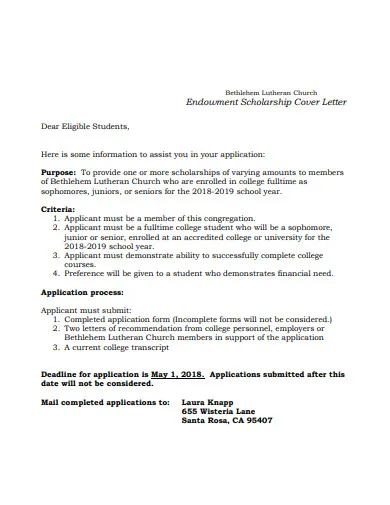
The primary purpose of a scholarship cover letter is to introduce yourself and your application to the scholarship committee. It gives you the chance to explain why you are applying for the scholarship, what your goals are, and how the scholarship will help you achieve them. It’s your chance to connect with the committee on a personal level, making your application more memorable and impactful. The goal is to convince the selection committee that you are the best candidate, demonstrating not only your academic achievements but also your character, values, and potential.
Key Components of a Cover Letter
A strong scholarship cover letter includes several key components. These include your contact information, a compelling introduction, details of your qualifications, a demonstration of how you fit the scholarship’s criteria, and an expression of gratitude. Each component plays a vital role in building your case for why you deserve the scholarship. A well-structured letter follows a logical flow, guiding the reader through your qualifications and aspirations while making a strong, lasting impression.
Researching the Scholarship
Thorough research is the foundation of any successful scholarship application. Before you even begin writing, take the time to fully understand the scholarship and its requirements. This includes knowing the selection criteria, the values the scholarship supports, and the types of students they typically award. This information will guide your writing and help you tailor your letter to the specific scholarship.
Understanding Scholarship Requirements

Carefully read the scholarship guidelines and requirements. Pay close attention to any specific instructions or prompts. Many scholarships have unique focuses or seek particular types of students. Make sure you understand the essay questions, the requested information, and the preferred format. Understanding the requirements ensures that your letter addresses the key areas the committee is looking for, increasing the likelihood of your application being considered. Ignoring these details can be detrimental to your chances.
Tailoring Your Letter
Once you understand the scholarship, tailor your cover letter to match its specific criteria and values. Highlight relevant experiences, skills, and achievements that align with the scholarship’s mission. Explain how your goals align with the scholarship’s objectives. Generic cover letters are easily spotted and often discarded. A customized letter demonstrates that you’ve invested time and effort, showing your genuine interest and commitment to the scholarship.
Formatting Your Scholarship Cover Letter
The format of your cover letter is just as important as its content. A well-formatted letter is easy to read and professional in appearance. Poor formatting can distract the reader and undermine the message you’re trying to convey. Pay attention to font, spacing, and overall presentation to ensure your letter makes a positive impression.
Font Selection and Formatting

Choose a professional and easy-to-read font, such as Times New Roman, Arial, or Calibri. Maintain a consistent font throughout your letter. Use a font size between 10 and 12 points for the body of your text, as this is the standard size for readability. Use bolding or italics sparingly, only to emphasize key points or headings. The goal is to create a clean, uncluttered look that is inviting to the reader.
Margins and Spacing
Use standard 1-inch margins on all sides of your letter. This provides a balanced look and ensures that the text is easy to read. Use single or 1.15 line spacing for the body of your text. Double-space between paragraphs to create visual breaks and improve readability. Proper spacing enhances the letter’s overall aesthetic and makes it easier for the committee to absorb the information.
Essential Content for Your Letter
Your scholarship cover letter needs to include several essential pieces of information to effectively convey your qualifications and aspirations. Each section serves a distinct purpose, contributing to the overall strength of your application. By including each of the elements below, you provide the committee with a comprehensive overview of your profile and your suitability for the scholarship.
Your Contact Information

At the top of your letter, include your full name, address, phone number, and email address. This information ensures that the committee can easily contact you if they have any questions or want to offer you the scholarship. Make sure your contact information is accurate and up-to-date, and use a professional-sounding email address.
The Introduction: Your Hook
The introduction is your first chance to make a positive impression. Start with a strong opening statement that grabs the reader’s attention. Briefly state the scholarship you are applying for and why you are interested in it. You can also include a brief overview of your key qualifications and your passion for the field of study or cause the scholarship supports. A captivating introduction sets the tone for the rest of your letter and encourages the committee to read on.
Highlighting Your Qualifications
The body of your letter should showcase your qualifications. Highlight your academic achievements, extracurricular activities, leadership experiences, and any other relevant skills. Provide specific examples to illustrate your accomplishments. For instance, instead of stating that you are a good leader, describe a situation where you led a project, the challenges you faced, and the positive outcomes you achieved. Quantify your achievements whenever possible to make them more impactful.
Demonstrating Your Fit

Explain why you are a good fit for the scholarship. Relate your goals and aspirations to the scholarship’s mission. Discuss how the scholarship will help you achieve your academic and career goals. Show that you understand the scholarship’s values and how you embody them. Tailor this section to match the specific criteria and focus of the scholarship, emphasizing the alignment between your aspirations and the scholarship’s purpose. Demonstrate your understanding of the scholarship’s objectives and your commitment to contributing to the field of study or cause it supports.
Expressing Gratitude and Closing
Conclude your letter by expressing your gratitude to the scholarship committee for their time and consideration. Reiterate your interest in the scholarship and your commitment to achieving your goals. Thank them for the opportunity to apply and express your anticipation of a positive response. A professional closing, such as “Sincerely” or “Respectfully,” followed by your typed name, leaves a lasting impression.
Writing Tips for Success
Writing a compelling scholarship cover letter requires attention to detail and a focus on clarity and impact. These writing tips will help you create a letter that stands out and effectively communicates your qualifications.
Show, Don’t Tell

Instead of simply stating that you possess certain qualities, provide specific examples that demonstrate those qualities. For instance, if you want to show your leadership skills, describe a project you led, the challenges you faced, and the positive outcomes you achieved. This approach makes your letter more engaging and credible, and it allows the committee to see your achievements rather than just read about them.
Proofreading and Editing
Proofread your cover letter meticulously for any grammatical errors, typos, and punctuation mistakes. Errors can undermine your credibility and make a negative impression. Read your letter aloud to catch any awkward phrasing or inconsistencies. Having a fresh pair of eyes review your letter is also a good idea; ask a friend, family member, or teacher to proofread your work. Attention to detail is crucial for creating a polished and professional cover letter.
Seeking Feedback
Before submitting your cover letter, ask someone you trust to provide feedback. A fresh perspective can help you identify areas for improvement, such as clarity, organization, and tone. Ask them to look for any weaknesses in your argument or any areas where you could strengthen your message. Use their feedback to refine your letter and ensure that it effectively communicates your qualifications and aspirations.
Common Mistakes to Avoid
Avoiding common mistakes can significantly enhance your chances of success. Being aware of these pitfalls will help you create a cover letter that is well-received and impactful.
Generic Letters
Avoid sending a generic cover letter that could be used for any scholarship. Customize each letter to match the specific scholarship’s requirements and values. Generic letters show a lack of effort and a lack of genuine interest. Demonstrate that you’ve researched the scholarship and tailored your letter to align with its mission and criteria. This will show your attention to detail and your genuine desire to be awarded the scholarship.
Typos and Grammatical Errors
Typos and grammatical errors can damage your credibility and make you appear careless. Always proofread your letter carefully before submitting it. Use spell-check and grammar-check tools, but don’t rely on them entirely. Read your letter aloud to catch any awkward phrasing or inconsistencies. Asking someone else to review your letter can also help you identify any errors that you might have missed.
Ignoring Instructions
Carefully read and follow all the instructions provided by the scholarship committee. Not following instructions demonstrates a lack of attention to detail and can result in your application being rejected. Pay close attention to the required format, the length of the letter, and any specific questions you need to address. Adhering to the instructions shows respect for the scholarship committee and increases your chances of being considered.
Finalizing and Submitting Your Letter
Once you’ve written and revised your cover letter, there are still a few final steps to ensure that you submit a polished and effective application.
Reviewing Before Submission
Before submitting your cover letter, review it one last time. Make sure your contact information is correct, and that you’ve addressed all the required components. Check for any remaining errors in grammar, punctuation, and spelling. Verify that your letter is well-organized and easy to read. Ensure that your tone is appropriate and that you’ve expressed your gratitude and enthusiasm for the scholarship.
Submitting Your Application
Follow the submission instructions carefully. Make sure you submit your cover letter by the deadline and in the required format. If the scholarship committee requires you to submit your application online, double-check that all the files are uploaded correctly. If you are submitting by mail, ensure that you have enough postage and that your application is sent to the correct address. Keep a copy of your submitted application for your records.
By following these tips, you’ll be well-prepared to write a scholarship cover letter that effectively showcases your qualifications and increases your chances of success. Remember, a well-crafted letter is a powerful tool in the scholarship application process. Good luck