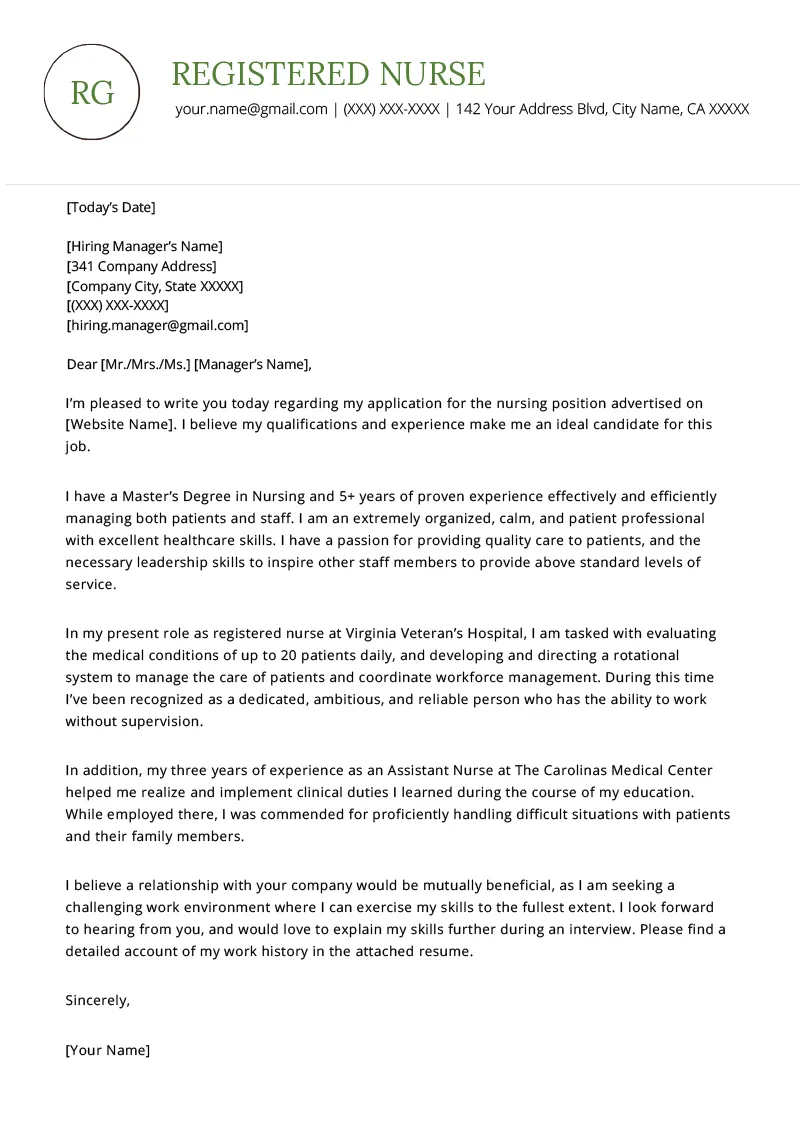
Crafting a Compelling Nursing Position Cover Letter
A nursing position cover letter is your first opportunity to make a strong impression on a potential employer. It’s not just a formality; it’s a crucial tool to showcase your skills, experience, and personality. A well-crafted cover letter complements your resume, providing a more detailed narrative of your qualifications and aspirations. It allows you to connect with the hiring manager on a personal level, demonstrating why you are the ideal candidate for the specific role. By taking the time to carefully construct your cover letter, you significantly increase your chances of securing an interview and landing your dream nursing job. This guide will help you unlock the secrets to writing a cover letter that stands out and gets results. Consider it your personal guide to a successful nursing job application.
Understanding the Importance of a Cover Letter for Nurses
In the competitive field of nursing, a cover letter can be the deciding factor between getting an interview and being overlooked. It’s your chance to go beyond the facts and figures listed in your resume and illustrate your passion for nursing. A cover letter lets you elaborate on your experiences, explain how your skills align with the job requirements, and express your genuine interest in the position and the healthcare facility. It also provides an opportunity to address any potential gaps in your resume or explain career transitions. Moreover, it demonstrates your attention to detail and your commitment to the application process, both of which are highly valued in the nursing profession. A well-written cover letter shows that you’ve taken the time to understand the role and the organization, making you a more attractive candidate.
Highlighting Your Nursing Skills and Experience

Your cover letter is the ideal place to highlight the skills and experiences that make you a standout nurse. Instead of simply listing your responsibilities, focus on the specific skills that align with the job description. For instance, if the job requires strong communication skills, provide examples of how you’ve effectively communicated with patients, families, and healthcare teams. If the role emphasizes critical thinking, describe situations where you’ve used your analytical abilities to solve complex medical issues. Make sure to tailor your description to the specific requirements listed in the job posting. Use action verbs to showcase your accomplishments. For instance, instead of saying “assisted patients,” say “provided compassionate care to over 50 patients daily, ensuring their comfort and well-being.” By providing concrete examples, you can demonstrate the value you bring to the role and make your application much more persuasive. This is a great way to showcase your nursing skills and experience
Listing Relevant Certifications and Licenses
Always include a section in your cover letter that clearly lists your relevant certifications and licenses. These credentials validate your expertise and demonstrate your commitment to professional development. Be sure to include the specific certifications that are required or preferred for the nursing position. This might include certifications such as BLS, ACLS, or specific nursing specialties like critical care or emergency room nursing. Mention the issuing organization and the expiration date of each certification to ensure accuracy and transparency. If you’re a newly licensed nurse, highlight your license and any related achievements, such as honors received during your nursing education. If you are renewing a license, state the renewal date. Including this information will help the hiring manager quickly assess your qualifications and ensure you meet the minimum requirements for the role.
Tailoring Your Cover Letter to the Specific Job
One of the most crucial secrets to writing an effective nursing cover letter is tailoring it to the specific job and healthcare facility. Generic cover letters rarely make a strong impact. Spend time studying the job description carefully. Identify the key requirements, skills, and values the employer is seeking. Then, structure your cover letter to demonstrate how your qualifications match these specific needs. Use the same keywords and phrases from the job description to show the hiring manager that you have read and understood the role’s demands. Highlight the specific skills and experiences that are most relevant to the position. Reference the facility’s mission, values, or recent initiatives to show that you are interested in more than just a job, but in contributing to the facility’s goals. Customize each cover letter for each position and company; this takes more effort but significantly increases your chances of success. This demonstrates your commitment and attention to detail, making you stand out from the crowd.
Researching the Healthcare Facility

Before you write your cover letter, research the healthcare facility where you are applying. Understanding the facility’s mission, values, and recent accomplishments can help you tailor your letter to resonate with the employer. Visit the facility’s website, read news articles, and check their social media pages. Look for information about their patient care philosophy, areas of specialization, and any awards or recognitions they have received. Incorporate this information into your cover letter to demonstrate your genuine interest in working there. For example, if the facility is known for its innovative approach to patient care, you can highlight your experience with similar practices. By showing that you understand and appreciate the facility’s unique aspects, you will distinguish yourself from other applicants. This will also show your commitment and attention to detail.
Showcasing Your Achievements and Contributions
Your cover letter is an excellent opportunity to showcase your nursing achievements and contributions. While your resume lists your responsibilities, your cover letter allows you to elaborate on your successes and quantify your impact. Provide specific examples of how you’ve made a positive difference in previous roles. Did you improve patient outcomes, reduce medication errors, or enhance patient satisfaction scores? Include details about your accomplishments, such as the size of the improvement and the time frame over which it was achieved. Use action verbs to describe your achievements and provide concrete data whenever possible. For example, “Implemented a new fall prevention protocol that reduced patient falls by 20% within six months.” Showing evidence of your achievements not only highlights your skills but also demonstrates your ability to contribute to the healthcare facility’s goals, which will help make you a candidate that is desired.
Quantifying Your Accomplishments for Impact
Whenever possible, quantify your accomplishments to make a stronger impression on the hiring manager. Numbers and data make your claims more concrete and demonstrate the tangible results of your work. Instead of saying “improved patient care,” say “improved patient satisfaction scores by 15% within a year.” Instead of saying “managed a team of nurses,” specify the number of nurses you supervised and any positive outcomes achieved. Did you reduce patient wait times, increase efficiency, or improve employee morale? Provide specific data to back up your claims. This not only shows the impact of your work but also provides the employer with measurable evidence of your value. By using quantifiable achievements, you make your cover letter more compelling and demonstrate your ability to deliver results. Including data makes your cover letter more engaging and will help you get the role.
Addressing Common Cover Letter Mistakes

Avoid common cover letter mistakes that can damage your chances of landing a nursing position. One common mistake is using generic language that could apply to any job. Instead, tailor your cover letter to the specific role and healthcare facility. Another mistake is neglecting to proofread. Typos and grammatical errors can make you appear unprofessional and careless. Always proofread your letter carefully before submitting it. Avoid simply restating your resume. Your cover letter should offer more detailed information, expanding on your skills and experiences. Don’t forget to include all necessary contact information. Ensure your contact details are current and easily accessible. Following this advice will ensure that you are perceived as a well-prepared and serious applicant. Address these common mistakes and show how you’re different.
Avoiding Generic Language and Clichés
To stand out from the crowd, avoid using generic language and clichés that could apply to any profession. Phrases like “hardworking” or “team player” are often overused and don’t provide any specific information about your abilities. Instead, focus on providing concrete examples of your skills and accomplishments. Use action verbs to describe your experiences. For example, rather than saying “I am a good communicator,” say “Effectively communicated with patients, families, and healthcare providers to ensure coordinated care.” Avoid using clichés. Be original and use your own voice. Use language that accurately reflects your abilities and shows why you are the best fit for the job. A unique, well-written cover letter highlights your individuality, making a lasting impression and helping you stand out from other applicants.
Demonstrating Your Passion for Nursing
Your cover letter is the ideal place to demonstrate your passion for nursing. Show the hiring manager that you are genuinely committed to patient care and the nursing profession. Share what drives you to be a nurse. Explain what aspects of nursing you find most rewarding. Discuss the specific areas of nursing you are most interested in. For example, if you are passionate about geriatrics, you can mention your experience working with elderly patients or your interest in learning more about this specialty. Share personal anecdotes or stories that illustrate your commitment to providing compassionate and effective care. By conveying your enthusiasm for nursing, you can make a strong connection with the reader and increase your chances of securing an interview.
Expressing Your Career Goals and Aspirations

Include a section in your cover letter that expresses your career goals and aspirations. This shows the employer that you’re not just looking for a job, but that you are committed to growing professionally within the field. Explain how this position aligns with your long-term career objectives. Are you hoping to specialize in a particular area of nursing, such as critical care or oncology? Are you interested in pursuing further education or certifications? Align your goals with the mission and values of the healthcare facility and explain how you want to contribute to the organization. Sharing your career aspirations demonstrates your ambition and your desire to grow professionally within the healthcare facility. This lets the hiring manager see that you are invested in the future.
Crafting a Strong Closing Statement
Conclude your cover letter with a strong closing statement that reinforces your interest in the position and encourages the employer to take action. Thank the hiring manager for their time and consideration. Reiterate your enthusiasm for the opportunity. Express your confidence that you are well-suited for the role and the healthcare facility. Clearly state your availability for an interview and provide your contact information again. End with a professional closing, such as “Sincerely” or “Respectfully.” The closing should leave a positive and lasting impression on the reader. By crafting a strong closing statement, you can demonstrate your professionalism and leave the hiring manager eager to learn more about you. This will lead to more opportunities and improve your career.
Emphasizing Your Value to the Employer
Throughout your cover letter, emphasize the value you bring to the employer. Focus on your skills, experience, and how you can contribute to the healthcare facility’s goals. Show the hiring manager that you’re not just looking for a job, but that you’re eager to make a positive impact. Highlight any unique qualifications, such as language skills, specialized training, or experience with specific patient populations. Illustrate how you can help the facility achieve its objectives, whether by improving patient outcomes, reducing costs, or enhancing the patient experience. By clearly demonstrating your value, you’ll significantly increase your chances of getting the job. The hiring manager wants to know what you can do for them, so make sure you show them.
Ensuring Professionalism and Polished Presentation

Presentation is key when submitting a nursing position cover letter. Ensure your cover letter is professional and well-formatted. Use a clear and readable font, such as Times New Roman or Arial, in a standard size. Maintain a consistent font throughout the document. Use single spacing and align your text to the left. Proofread your cover letter carefully for any grammatical errors, typos, or inconsistencies. Avoid using slang or casual language. Use proper salutations, such as “Dear [Hiring Manager Name],” and professional closings, such as “Sincerely.” Make sure your contact information is up to date and clearly displayed. A professional and polished cover letter demonstrates your attention to detail and your commitment to the application process. By presenting yourself in a professional manner, you increase your chances of making a positive first impression and getting hired.
Proofreading and Editing Your Cover Letter
Before you submit your nursing cover letter, take the time to proofread and edit it carefully. Typos and grammatical errors can undermine your credibility and make you appear careless. Review your letter for spelling mistakes, punctuation errors, and grammatical inaccuracies. Read your cover letter aloud to catch any awkward phrasing or sentences that don’t flow smoothly. Ask a friend, family member, or career counselor to review your cover letter. A fresh pair of eyes can often spot errors that you might have missed. Make sure that your cover letter is well-organized and easy to read. Ensure that you have included all the necessary information and that your message is clear and concise. Proofreading is a crucial step in ensuring that your cover letter represents you in the best possible light.